PEOPLE
Two beats a second
In one motion study, dancers' bouncing peaked at 2 beats a second, which is 120 bpm.
Try the tempos doodlebeat
THE SCIENCE OF RHYTHM
Tapping your foot to a song is harder than it looks, and more widespread than you might think.
Try the tempo picker
120 BPMtwo a second
Babies do it before they can walk. A cockatoo, a sea lion and even lab rats have been studied doing it. Here is what research says about tempo, BPM and why a steady beat pulls us in, in plain English.
Plain English, with the sources linked.
At a glance
120–140 bpm
Head bobs most in time at
University of Tokyo researchers played music to 10 rats and 20 people. The rats moved most in time within 120 to 140 bpm. The main piece was a Mozart sonata at 132 bpm.
RATS · TOKYO · 2022
99th percentile
Beat-keeping reliability
Ronan, a 16-year-old California sea lion, bobbed her head to a metronome at 112, 120 and 128 bpm. She matched or beat ten students, and modelled against 10,000 people she ranked in the 99th percentile.
SEA LION · SANTA CRUZ · 2025
TWO STUDIES WORTH KNOWING
Beat-keeping was long thought to be
a mostly human skill. The evidence is widening.
Neither study means animals hear music the way we do. They show that moving in time with a steady beat is not uniquely human.
A QUICK TEMPO PICKER
Pick a tempo to see how many beats land each second, how far apart they are, and where that speed turns up in the research.
The arithmetic is simple: divide 60,000 by the bpm to get the milliseconds between beats.
THE SHORT ANSWER
Tempo is how fast that pulse runs,
usually counted in beats per minute.
PEOPLE
In one motion study, dancers' bouncing peaked at 2 beats a second, which is 120 bpm.
Try the temposANIMALS
A cockatoo, a sea lion and lab rats have all been studied moving in time with a beat.
See the studiesMEASURING IT
Musicians have used the metronome to hold a constant tempo since the early 1800s.
Rhythm facts
FIND THE BEAT
The kick drum or bass usually marks the main pulse. Tap a finger each time you hear it.
Most popular songs group beats in fours. Count one, two, three, four and notice where the strong beat falls.
Count the beats for 15 seconds and multiply by four. That gives you the tempo in beats per minute.
Set a metronome slower than the song, clap along until it feels easy, then nudge the tempo up.
RHYTHM FACTS
A 2010 University of York study found infants aged five months to two years moved more rhythmically to music than to speech, and smiled more the better they matched it.
The York researchers concluded it was the beat, rather than features such as melody, that produced the babies' response.
A 2019 Current Biology study found Snowball, a sulphur-crested cockatoo, made 14 distinct dance movements without being trained, and varied them from song to song.
Researchers tested 33 people bouncing to music, and their movement peaked at the beat. One man, studied for beat deafness, showed no peak at the beat at all.
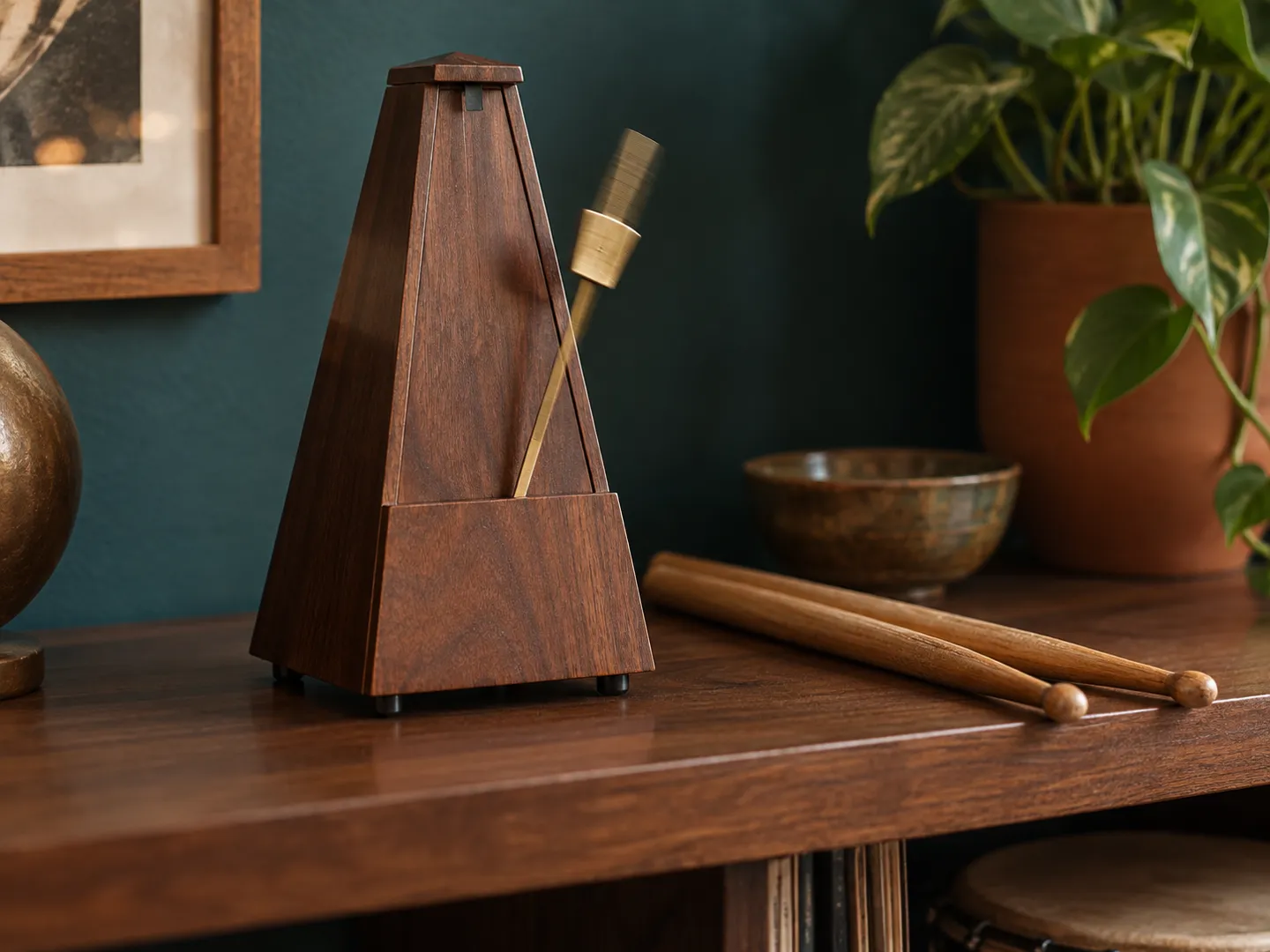
A metronome in the University of Reading's collection is described as Maelzel's metronome, patented in England in 1815, used by musicians to keep a constant tempo.
QUICK QUESTIONS
Short answers to the questions people ask most.
BPM stands for beats per minute, the usual way to give a tempo. At 60 bpm there is one beat every second; at 120 bpm there are two beats a second, one every 500 milliseconds.
No. A sulphur-crested cockatoo called Snowball, a California sea lion called Ronan and laboratory rats have all been studied moving in time with a beat. Ronan matched or beat ten university students in a 2025 study.
A 2010 University of York study of infants aged five months to two years found they moved more rhythmically to music and rhythmic beats than to speech, and the better they matched the music, the more they smiled.
Yes, though it is rare. Researchers studied a man who could not bounce in time with most music, even though 33 other people tested the same way could. It has been called beat deafness.
The clockwork metronome sold under Maelzel’s name was patented in England in 1815, according to the University of Reading’s museum collection, which holds one with its winding key.
Sources
A NAME WITH RHYTHM
doodlebeat.com is part of the DoodleSale portfolio. It isn't in an auction right now, but you can ask about leasing it.